
A Booking Funnel Example for Swiss Vacation Rentals
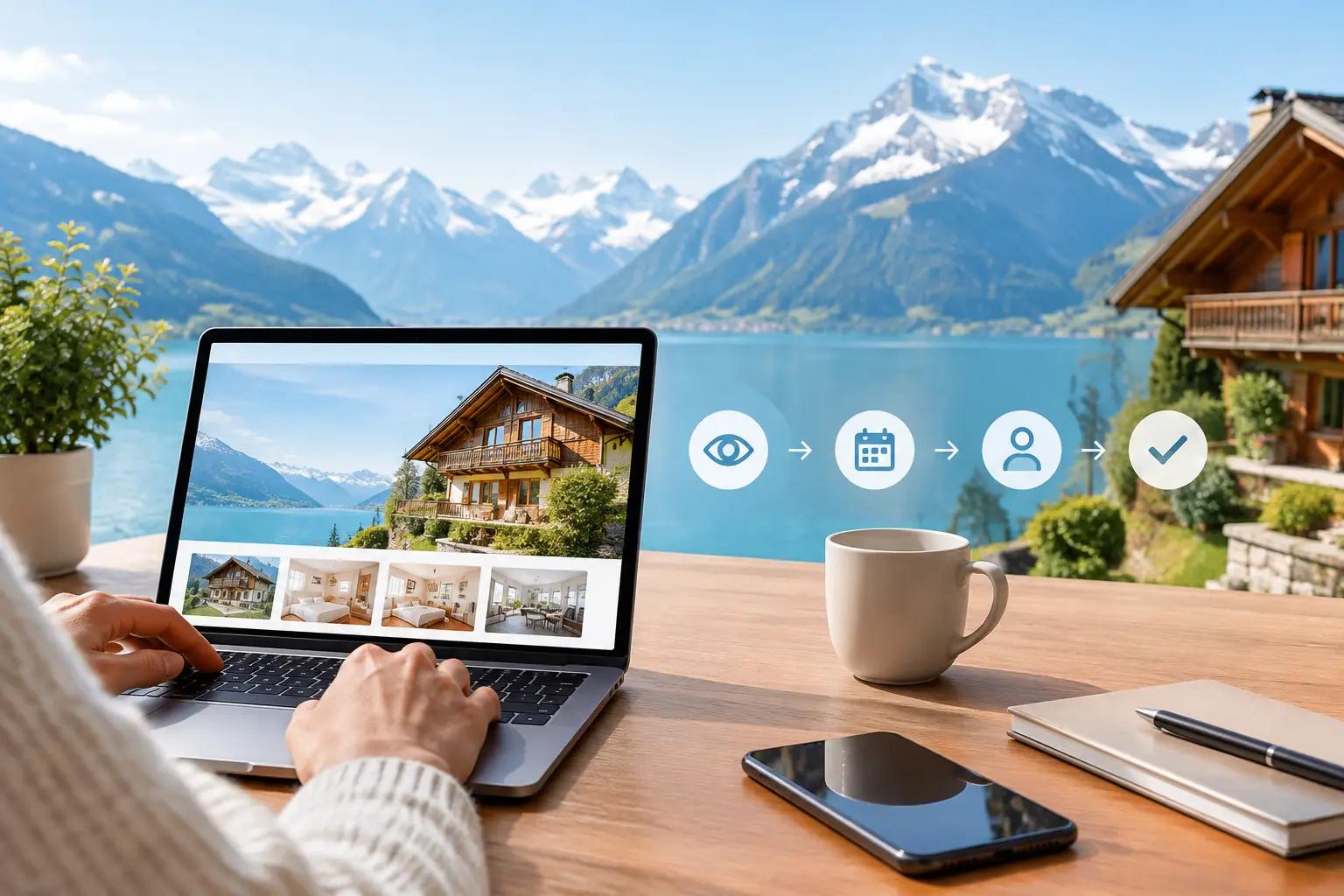
A strong booking funnel example starts long before a guest enters payment details. It begins when someone imagines a long weekend in the mountains, a family break by a lake, or a city stay with room to relax. For Swiss vacation rentals, every step between that first idea and a confirmed reservation should make the next decision feel clear, welcoming, and worthwhile.
For hosts, the funnel is not simply a marketing term. It is a practical way to see where potential guests lose momentum - and where small improvements can turn interest into bookings. A beautiful chalet may attract attention, but accurate availability, useful details, and a straightforward inquiry process are what help a guest commit.
What a booking funnel means for a vacation rental
A booking funnel follows the guest journey from discovery to reservation. The journey is rarely perfectly linear. A traveler may browse a destination, compare several homes, leave, return on another device, and book days later after checking dates with friends or family.
Still, the core path is easy to understand: a traveler discovers a destination or property, considers whether it fits their trip, checks availability and total costs, then completes a booking or sends an inquiry. At each stage, they need a little more certainty.
For a Switzerland-focused marketplace, the funnel also includes destination inspiration. Guests may begin with a broad idea such as hiking near Zermatt, skiing with children in Graubünden, or enjoying a lakeside escape in Ticino. They do not always know the exact property or even the exact village when they start searching.
A booking funnel example from search to stay
Imagine a couple from the United States planning a September trip through Switzerland. They want three nights in the Bernese Oberland, easy access to hiking, and an apartment with a balcony. Their journey shows how a well-designed funnel supports real booking intent.
1. Discovery: the trip idea becomes a search
The couple begins with broad searches around mountain villages, scenic hiking, and places to stay near Interlaken. They may find a destination page, an accommodation category, or a property listing through search, social content, or a recommendation.
At this point, the goal is not to push a reservation. It is to make the destination feel relevant and help them orient themselves quickly. Clear location descriptions, appealing photography, and practical context create the first layer of trust.
A listing titled only “Cozy Apartment” gives the guest little reason to click. “Bright Balcony Apartment Near Interlaken Trails” is more specific and better aligned with the trip they are already imagining. It sets an expectation that the property page should fulfill.
2. Consideration: the guest compares options
After clicking through, the couple reviews photos, sleeps up to four guests, kitchen facilities, Wi-Fi, parking, and distance to the nearest train connection. They also compare the apartment with several alternatives.
This is where incomplete information causes avoidable drop-off. Guests should not have to guess whether the balcony is private, whether the kitchen is equipped for cooking, or whether the property is suitable for a couple traveling with luggage. The description should answer the questions guests are most likely to have before they ask them.
Strong property pages balance atmosphere with practical detail. A few sentences can convey the experience - morning coffee with mountain views, a quiet base after a day outdoors - while the amenities and house information handle the specifics.
Photos matter just as much. Show the spaces guests use to make decisions: the bedroom, bathroom, kitchen, living area, view, entrance, outdoor space, and parking when relevant. Beautiful images create desire, but representative images protect trust.
3. Evaluation: dates, price, and confidence
The couple enters their dates and sees whether the apartment is available. They want a clear total before moving forward, including any mandatory charges presented in a transparent way. Surprise costs at the final step can make even an excellent property feel uncertain.
Availability must be reliable. If calendars are not current, guests may submit an inquiry only to learn that their preferred dates are unavailable. That creates friction for the traveler and extra work for the host. Hosts managing more than one booking channel benefit from keeping calendars coordinated so the booking path remains dependable.
The same applies to booking rules. Minimum stays, check-in windows, pet policies, and cancellation terms should be easy to find and written in plain language. Detailed does not need to mean complicated. Guests are more comfortable booking when they understand what happens next.
4. Action: booking or inquiry
The final action should match the way the property is managed. For some rentals, instant booking is the best fit because availability, rates, and guest requirements are ready to confirm. For others, an inquiry flow is more appropriate, particularly when a host needs to confirm special arrangements or seasonal details.
Either approach needs a clear call to action. If a guest is ready to reserve, do not distract them with unnecessary steps. If they need to ask a question, make it obvious how to do so and what information to provide, such as dates, guest count, and any relevant request.
A quick, helpful response can protect a booking that might otherwise go elsewhere. Hosts do not need to write lengthy messages. A friendly confirmation of availability, the next step, and a response to the guest’s specific question often does more than a generic template.
5. Confirmation: the booking becomes a relationship
The funnel does not end when payment is complete. A clear confirmation reassures the guest that the trip is real and well organized. It should confirm dates, guest count, property address or arrival guidance at the appropriate time, and the next expected communication.
For a Swiss stay, practical arrival information is especially valuable. Guests may be arriving by train, navigating a mountain road, or coordinating a late check-in after a flight. Helpful instructions reduce uncertainty and set a professional tone before they arrive.
This final stage also supports better reviews and repeat visits. When expectations are accurate from the start, guests are more likely to feel satisfied with the experience they booked.
Where hosts most often lose bookings
Not every visitor who leaves a listing was ready to book. Some are still researching, comparing dates, or planning a future trip. The goal is not to eliminate all drop-off. It is to remove hesitation for guests who already have genuine intent.
Common issues are usually straightforward: unclear location information, too few photos, missing amenities, outdated availability, slow replies, or a price that changes late in the process. Review the journey as if you were a first-time traveler. Can you understand the property, estimate the full stay cost, and take the next step without contacting the host for basic facts?
It also depends on the type of rental. A high-end villa may need more detailed information about privacy, parking, and group suitability. A compact city apartment may convert best with concise details about transport, workspace, and check-in. A family chalet benefits from being specific about bedrooms, child-friendly features, and outdoor access.
How to improve your booking funnel without overcomplicating it
Start with the property page rather than adding more marketing. Update the title so it reflects the location and strongest guest benefit. Check that the first photos show the property at its best while honestly representing the stay. Then fill in the details that answer practical questions before they become barriers.
Next, test the booking path. Search for the property, select dates, and look closely at what a guest sees before confirming. Is the calendar accurate? Are fees explained? Is the inquiry or reservation button easy to find? Small points of friction are easiest to fix when viewed from the guest’s perspective.
Finally, connect the property to the wider travel experience. A guest rarely books a rental in isolation. They are booking access to a hiking trail, a ski area, a lake, a historic town, or time with people they care about. CH Rentals helps bring accommodation and Swiss destination discovery together, giving travelers a more informed route from inspiration to stay.
A thoughtful booking funnel does not pressure guests. It gives them enough confidence to picture the trip clearly, choose the right home, and look forward to arriving.