How to Prepare Holiday Rental Photos That Book
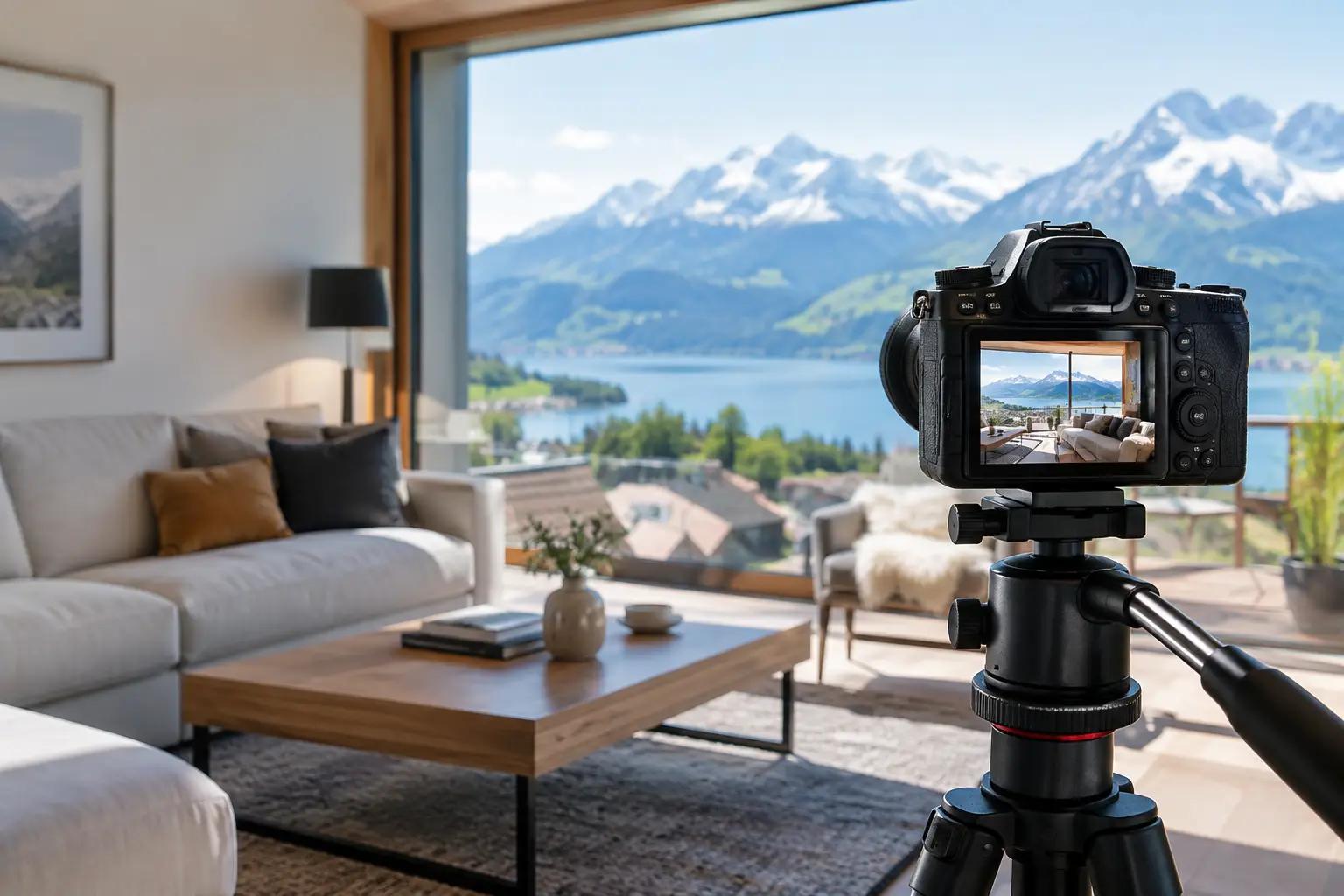
A bright chalet living room with a view of the Alps can catch a traveler’s attention in seconds. But to prepare holiday rental photos that earn real inquiries, the room needs to feel as good in the image as it will on arrival. Guests are not simply assessing furniture. They are picturing breakfast at the table, where the children will sleep, whether their luggage will fit, and what the stay will feel like after a day on the slopes or by the lake.
Strong photography sets accurate expectations and gives travelers confidence to book. It also helps the right guests recognize that your apartment, chalet, or holiday home suits their trip. The goal is not to make a property look different from reality. It is to present its best, most welcoming, and most useful version.
Prepare holiday rental photos with the guest journey in mind
Before moving a cushion or picking up a camera, consider who is most likely to stay. A compact city apartment may appeal to couples on a weekend break or business travelers. A mountain home may be chosen by families, hikers, skiers, or groups of friends. Their priorities are different, and your photos should answer their practical questions.
For a family-friendly property, show the dining area, sleeping arrangements, outdoor space, high chair, crib, storage, or easy parking if those features are available. For a ski retreat, make the boot storage, fireplace, mountain view, ski access, or nearby transport easy to understand. For a lakeside stay, a clear photo of the terrace and its outlook may be more persuasive than another close-up of a decorative object.
Think through the guest journey in a natural order: arrival, shared spaces, bedrooms, bathrooms, kitchen, outdoor areas, and the standout feature that makes the stay memorable. This creates a gallery that is easy to follow and helps travelers imagine settling in.
Start with a clean, guest-ready space
Photography reveals details that are easy to overlook in person. A crowded counter, loose cables, bathroom products, or a coat on a chair can make even a well-kept rental feel less considered. Prepare the property as though a valued guest were arriving that afternoon.
Clean every visible surface, including mirrors, shower glass, windows, appliance fronts, and floors. Check for crumbs, marks, burned-out bulbs, and tangled blinds. Fresh towels should be folded neatly, beds made smoothly, and trash bins emptied. In the kitchen, leave enough on display to suggest usefulness, but avoid visual clutter. A coffee machine, attractive mug, and simple fruit bowl can work well; a counter full of cleaning supplies does not.
Personal items should be removed wherever possible. Family photographs, private paperwork, excess toiletries, and overfilled wardrobes can distract from the space and raise questions about privacy. A rental should feel warm, not anonymous, but the visual story should center on the guest’s stay.
Style for comfort, not a showroom
A few carefully chosen details make rooms more inviting: a folded throw, a book by a reading chair, a set dining table, or cushions arranged with intention. In Switzerland, natural materials, local design, mountain textures, and seasonal touches can add authentic character when they genuinely reflect the property.
Restraint matters. Over-staging can look artificial and may disappoint guests who expect every decorative detail to be present. Use real amenities and keep the setting believable. If the balcony is photographed for summer dining, make sure it is equipped that way when summer guests arrive.
Make light work for every room
Natural light is usually the most flattering choice for holiday rentals. Plan your shoot for the time of day when each key room is brightest without harsh shadows. Open curtains fully, raise blinds, and clean the windows beforehand. For homes with a mountain, lake, or village view, test the timing so the outside scene is visible rather than washed out.
Avoid photographing dark interiors with every light switched on if daylight is available. Mixed lighting can create yellow or blue color casts that make walls and furnishings look inaccurate. During the day, turn on a small number of lamps only when they add a sense of warmth or help illuminate a dark corner.
Some properties require a different approach. A cozy alpine living room can look especially appealing in early evening with the lamps on and a fire lit, while a panoramic terrace may be at its best in soft morning light. Consider taking a small number of mood images in addition to bright, informative daytime shots. The gallery needs both atmosphere and clarity.
Photograph the spaces guests use most
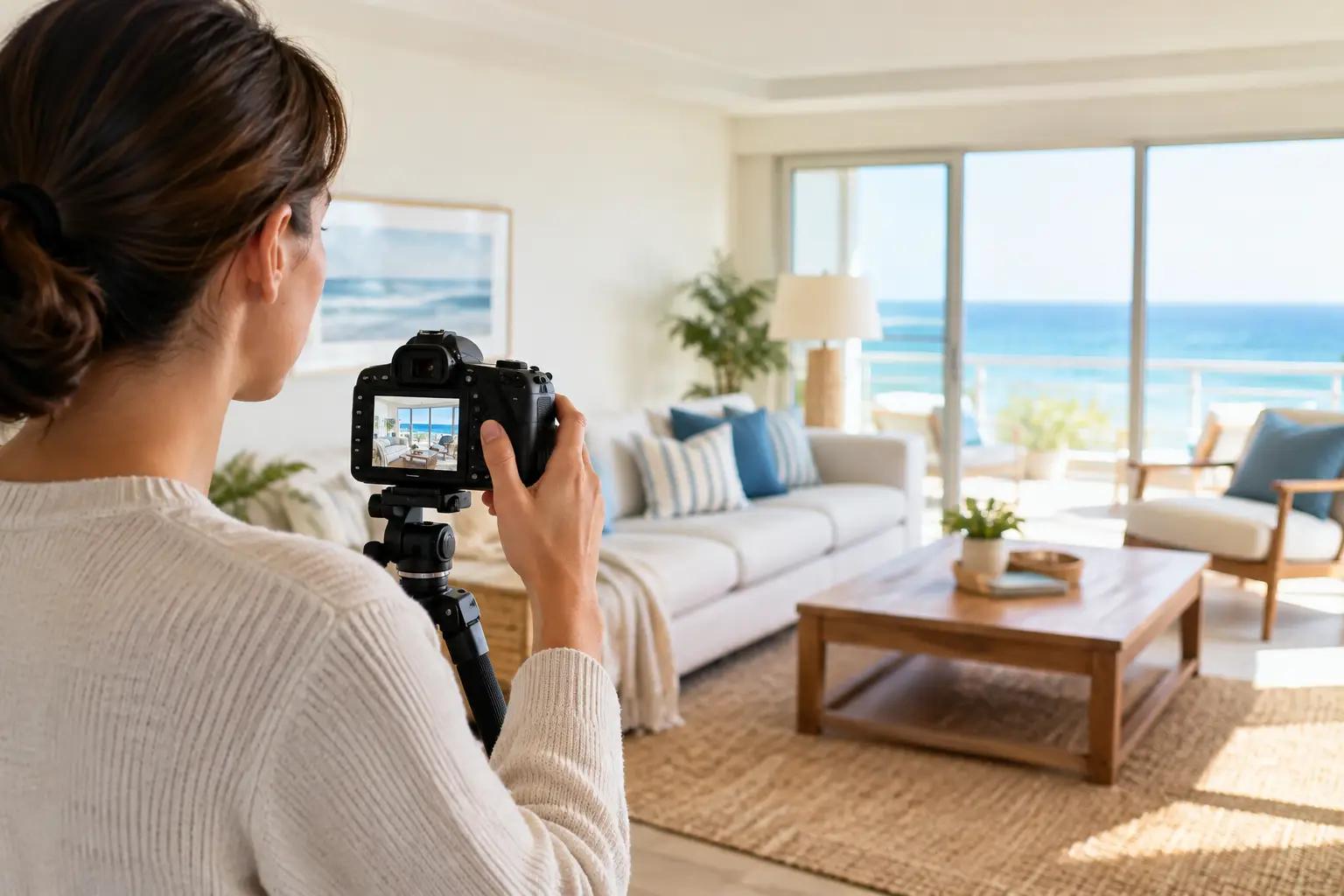
Wide, well-composed photos help guests understand layout and scale. Stand in a corner or doorway where possible, keep vertical lines straight, and shoot at a natural height rather than from very high or low angles. A tripod can make a noticeable difference, especially in rooms with limited light.
Begin with the rooms that influence booking decisions: the exterior or arrival view, living room, kitchen, each bedroom type, bathrooms, and the main outdoor area. Take more than one angle where it adds useful information, but do not repeat nearly identical images. Travelers would rather see a complete, honest gallery than scroll through six versions of the same sofa.
Bedrooms deserve particular care. Show the full bed, the route around it, bedside lighting, and storage if it is a selling point. If a room has bunk beds, sofa beds, or a low ceiling, photograph it clearly. Transparency attracts guests who are comfortable with the setup and reduces mismatched expectations.
Bathrooms should look bright, dry, and simple. Close the toilet lid, straighten towels, remove used products, and use a clean bath mat only if it improves the composition. If the bathroom is compact, do not rely on extreme wide-angle editing to make it appear much larger than it is.
Capture amenities and local appeal honestly
The most effective detail photos prove what guests will have access to. A dedicated workspace, washer and dryer, sauna, EV charging point, ski room, elevator, private garden, or secure bike storage can be a deciding factor for the right traveler. Photograph these features clearly, especially when they are difficult to communicate in a short listing description.
Location images can add helpful context, but they should not replace photos of the rental itself. If the property has a genuine view of Lake Geneva, the Matterhorn, vineyard terraces, or a quiet village square, show the view from the property and describe it accurately. A nearby attraction should only appear if it helps guests understand the experience without implying it is on-site or immediately next door.
Seasonality is worth considering. Snow-covered images can be compelling for a winter chalet, while green hiking trails and furnished balconies may be better for summer bookings. If your property welcomes guests year-round, keep the main gallery current and include seasonal images only when they remain representative.
Edit for accuracy, then build a clear gallery
Editing should refine an image, not reinvent the property. Adjust exposure, straighten lines, correct white balance, and crop distractions from the edges. Avoid heavy filters, exaggerated skies, or oversaturated colors. Travelers appreciate a place that looks appealing online and familiar when they open the door.
Choose a strong exterior, view, or living-space image as the first photo. Then arrange the rest in a logical sequence, moving through the home as a guest would. Lead with your best images, but do not bury essential rooms. If there are three bedrooms, guests should be able to see all three without hunting through the gallery.
Before publishing, review the photos on both a desktop screen and a phone. Many travelers browse between train connections, during a lunch break, or while planning with family. If an image is too dark, too busy, or unclear on a smaller screen, replace it.
Consider when professional photography is worth it
A skilled property photographer understands light, perspective, and how to photograph compact or unusual spaces honestly. Professional photography can be particularly valuable for premium villas, design-led homes, properties with outstanding scenery, or rentals in competitive destinations. It can also save time for busy hosts and property managers.
That said, professional images are not a substitute for preparation. The photographer can improve composition, but cannot make clutter, poor maintenance, or missing amenities disappear. If your budget is limited, invest first in cleaning, small repairs, good lighting, and a careful shot plan. A modern smartphone, tripod, and thoughtful staging can produce excellent results for a well-prepared property.
Refresh your gallery whenever you renovate, replace key furniture, add an amenity, or when the season changes the property’s appeal. At CH Rentals, clear and welcoming images help travelers plan the right Swiss stay with confidence. Give each photo a job: to show comfort, answer a question, or inspire a guest to imagine arriving. That is how a gallery becomes an invitation.